

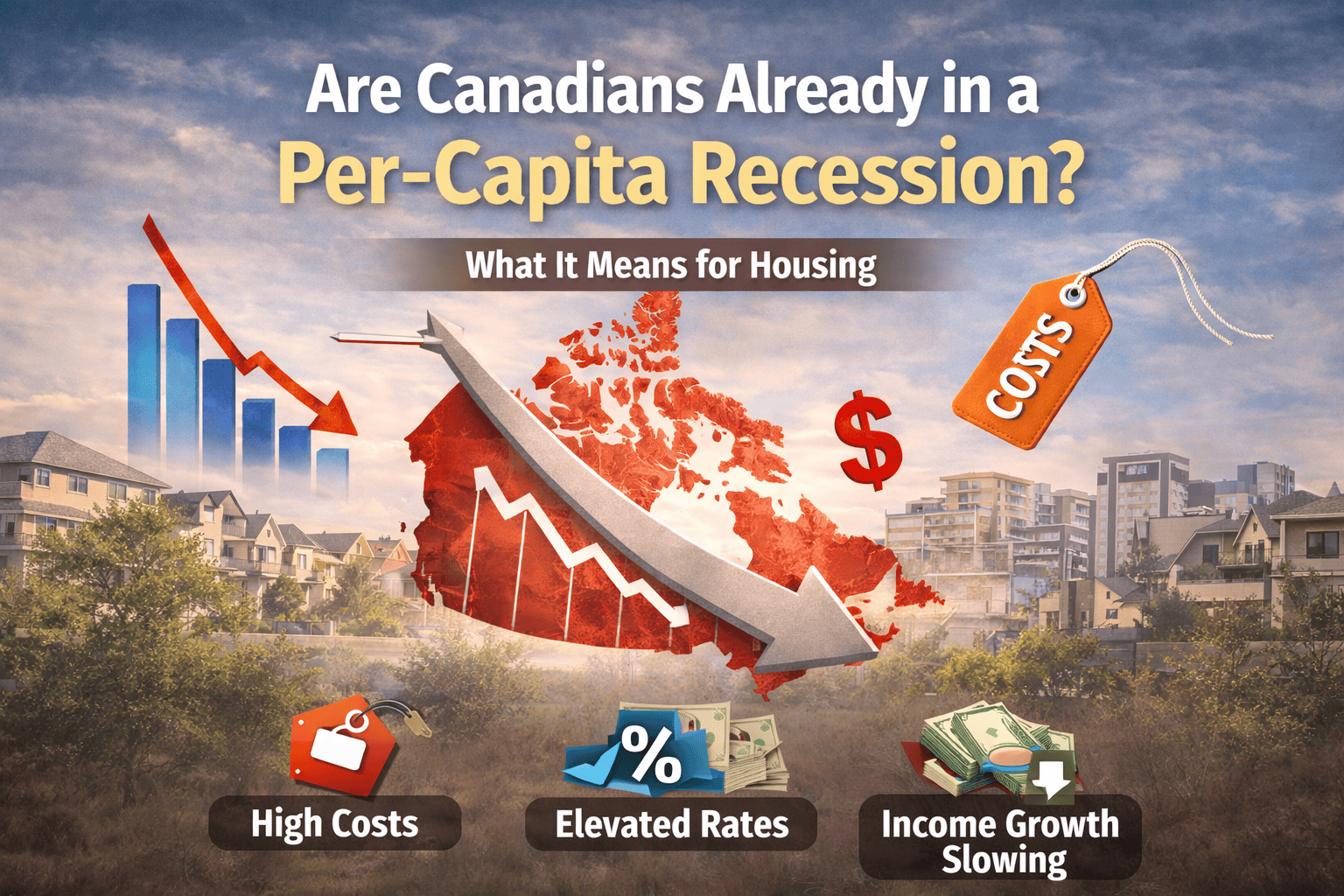
What It Could Mean for Housing
You may have heard that Canada has avoided a recession. Technically, that’s true — at least by traditional definitions. But when economists look beyond the headlines, a different picture emerges. Many analysts now say Canada is already in a per-capita recession, and that has real implications for housing, affordability, and buyer confidence.
Important: What Is a Per-Capita Recession?
A per-capita recession happens when economic output per person declines, even if the overall economy is still growing.
In Canada’s case, strong population growth has kept total GDP from falling. However, when that growth is divided among more people, the average Canadian is producing — and earning — less than before. This helps explain why many households feel financially stretched, despite official data suggesting the economy is holding steady.
Why It Feels Like a Recession to Many Canadians
Even without a formal recession, everyday Canadians are feeling pressure:
- Living costs remain high, especially housing, food, and utilities
- Interest rates are still elevated, increasing borrowing costs
- Income growth hasn’t kept pace with inflation and population growth
When people feel less financially secure, they tend to delay major decisions — including buying or upgrading a home.

How This Connects to the Housing Market
Economic slowdowns on a per-person basis can influence real estate in several ways:
Affordability challenges continue
Slower income growth makes it harder for buyers — particularly first-time buyers — to qualify for mortgages or feel comfortable taking on large payments.
Rental demand remains strong
When ownership feels out of reach or uncertain, more people stay in the rental market longer. This can keep rental demand elevated, especially in growing cities.
Buyer confidence becomes cautious
Even motivated buyers may take more time, negotiate harder, or wait for clearer economic signals before making a move.
Why Headline Numbers Don’t Tell the Whole Story
Canada’s economy hasn’t met the traditional definition of a recession (two consecutive quarters of negative GDP growth). However, per-capita economic output has been declining, which helps explain why many Canadians feel worse off — even when the headlines sound optimistic.
Population growth can make overall numbers look stronger, but it doesn’t always translate into better living standards for individuals.
What This Means for Buyers, Sellers, and Investors
If you’re involved in real estate, this is a reminder to look beyond surface-level statistics.
- Buyers may be more price-sensitive and cautious
- Sellers may need realistic expectations around pricing and timing
- Investors should closely watch affordability, rental demand, and local market fundamentals
Understanding the broader economic environment helps you make smarter, more informed decisions — especially in a market shaped by both population growth and financial pressure.
Credit to Better Dwelling for the blog: Click Here