

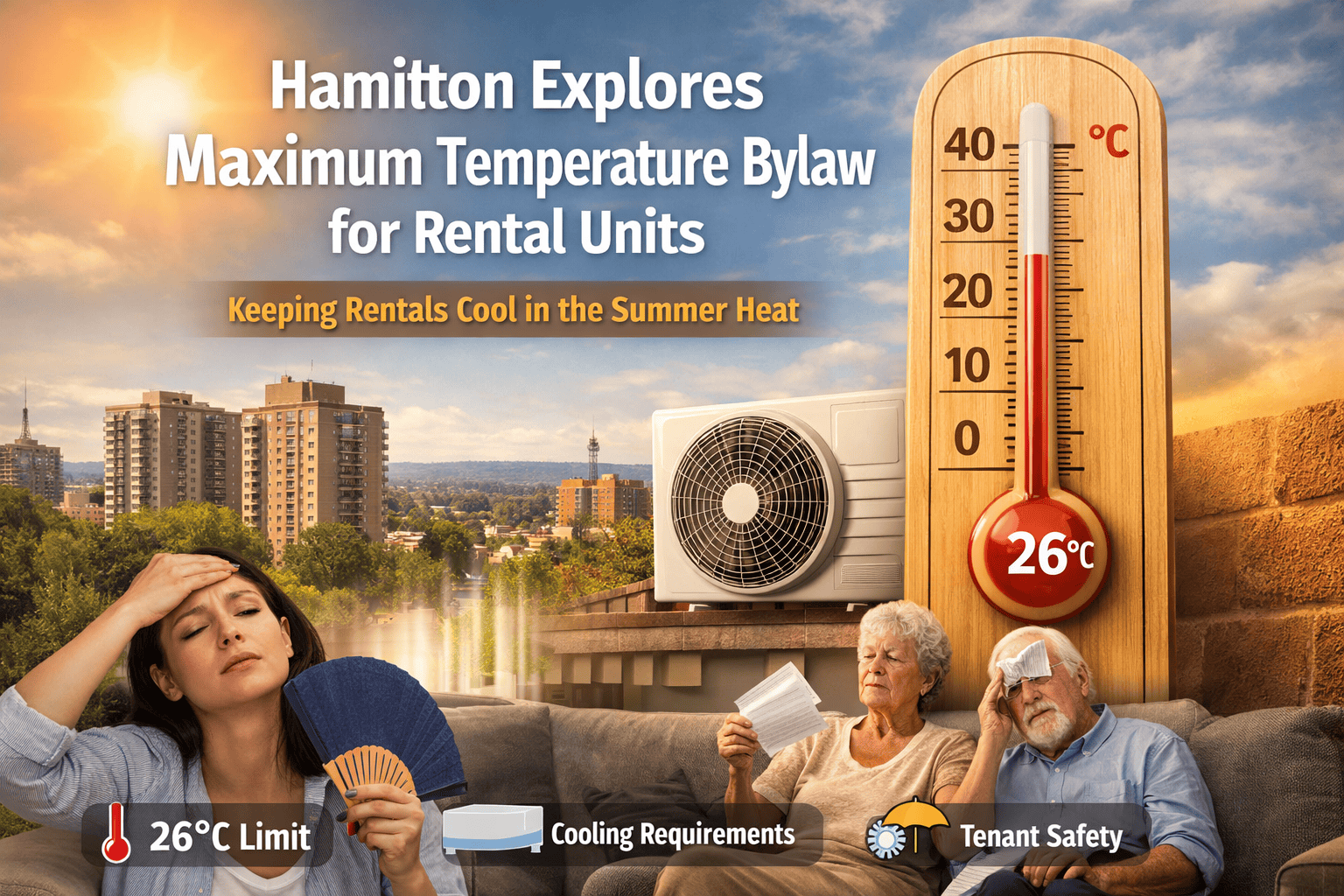
Hamilton Looks at a Maximum Temperature Bylaw to Keep Rental Units Comfortable in Summer
With increasingly hot summers becoming the new normal, Hamilton’s city government is exploring new ways to protect people living in rental homes and apartments from extreme indoor heat. The focus? A potential Maximum or Adequate Temperature Bylaw that could require landlords to ensure indoor spaces don’t get too hot during warm weather months.
Why This Matters for Renters
Historically, Hamilton — like many Ontario cities — has rules requiring landlords to provide minimum heat levels in winter, but there’s no equivalent standard for cooling in the summer. Rental units can reach dangerous temperatures on prolonged hot days, particularly in buildings without air conditioning.
City Council initially directed municipal staff back in May 2023 to explore options for a bylaw that would set a maximum indoor temperature of 26°C — a level many experts say helps protect tenants from the health effects of extreme heat.
Important: What a Maximum Temperature Bylaw Could Mean
If adopted, the proposed bylaw would:
- Require landlords to ensure rental units don’t exceed about 26°C during summer heat waves.
- Potentially mandate installation or proper maintenance of cooling equipment (like air conditioning).
- Improve tenant comfort and safety — especially for seniors, children, and people with health vulnerabilities, who are most at risk from extreme heat.
This kind of bylaw would bring summer temperature standards closer in line with Hamilton’s existing winter heating requirements, aiming to make homes more livable year-round.
Where Things Stand Now
The city has been actively collecting feedback from tenants, landlords and residents to shape how this bylaw might work in practice. Public surveys were open into early February 2026 to help inform recommendations. Staff are expected to compile that input and present a final report and implementation plan to Council before the upcoming summer season.
That timeline means decisions could be made soon — potentially affecting how rental properties are managed for heat and cooling in the years ahead.
What This Could Mean for Property Owners
While tenant comfort is a key goal, some property owners have expressed concerns about the costs and feasibility of new cooling requirements, especially in older buildings that were not designed with central air conditioning. Debate continues over the best way to balance health-based temperature standards with practical realities for landlords and investors.
Final Thoughts
As Hamilton grows and the climate changes, new rental property standards like a maximum temperature bylaw could have meaningful implications for both tenants and landlords. Keeping an eye on these developments will help you understand evolving expectations around rental comfort, property management and investment considerations in the city.
Credit to Urbanicity for the blog: Click Here