


Ontario Bill 60: What It Means for Real Estate, Housing, and Investors
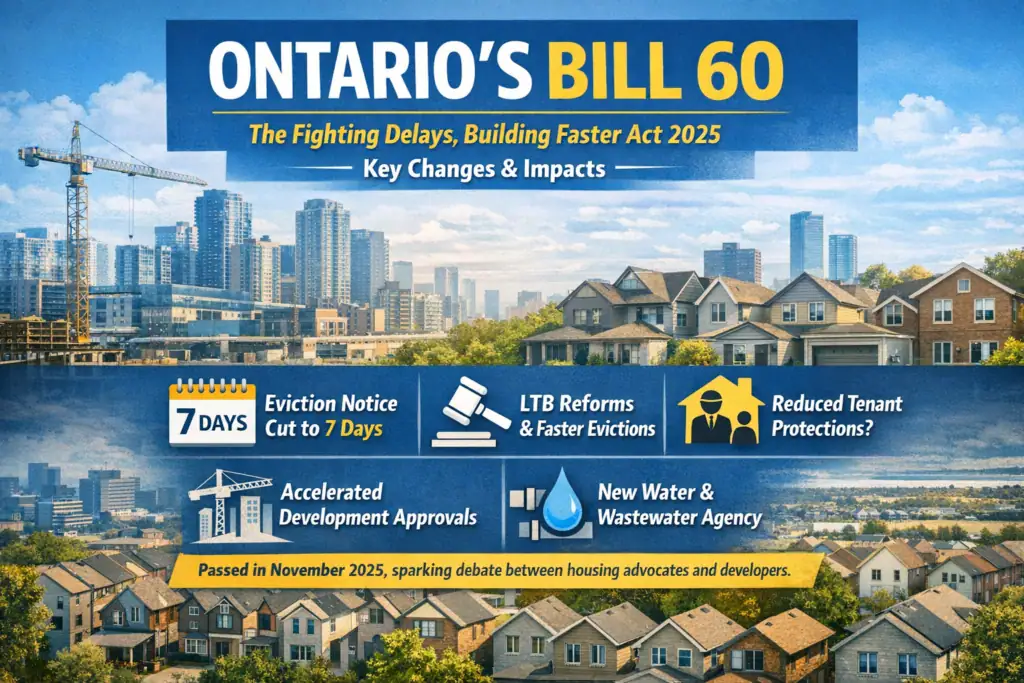
In November 2025, the Ontario government passed Bill 60 – The Fighting Delays, Building Faster Act, 2025, a wide‑ranging piece of legislation designed to accelerate housing development and reform landlord‑tenant processes. The bill introduces notable changes that impact landlords, tenants, developers, and real estate investors across the province.
Below is a clear breakdown of what Bill 60 includes and why it matters for Ontario’s real estate market heading into 2025–2026.
Key Highlights of Ontario Bill 60
1. Eviction Process Changes
One of the most discussed components of Bill 60 is the reduction of the eviction notice period for non‑payment of rent. Under the new rules, tenants now have 7 days to pay rent arrears to avoid eviction, down from the previous 14 days.
For landlords and investors, this change may reduce prolonged cash‑flow disruptions caused by unpaid rent. Critics, however, argue that the shortened timeline increases housing instability for tenants already facing financial pressure.
2. Landlord and Tenant Board (LTB) Reforms
Bill 60 introduces several changes aimed at addressing long‑standing delays at the Landlord and Tenant Board:
- Limits the LTB’s ability to delay eviction proceedings
- Adds more adjudicators to reduce case backlogs
Increases penalties for landlords or tenants deemed to be “bad actors”
For property owners, these reforms are intended to create more predictable and timely outcomes when disputes arise.
3. Shifts in Tenant Protections
Housing advocates have raised concerns that Bill 60 shifts the balance of power toward landlords. The legislation reduces compensation requirements in certain personal‑use eviction cases and makes it easier for eviction orders to proceed.
Supporters argue that clearer enforcement benefits the overall rental market, while critics worry it may reduce tenant security.
4. Accelerated Housing Development
A major goal of Bill 60 is to increase housing supply by cutting red tape. The Act streamlines:
- Planning approvals
- Zoning processes
- Transit‑related development approvals
By shortening approval timelines, the government hopes to improve project feasibility for builders and developers and encourage faster delivery of new housing across Ontario.
5. Water and Wastewater Management Changes
The legislation also creates a new corporation to manage water and wastewater services in certain municipalities. While this may seem less visible, it could impact infrastructure planning, servicing timelines, and long‑term development costs for future housing projects.
Industry Reaction to Ontario Bill 60
Bill 60 was met with significant protest from housing advocates, who argue that it prioritizes developers and landlords over tenant stability. Supporters counter that the legislation addresses chronic delays in development approvals and dispute resolution — issues they say have contributed to Ontario’s housing shortage.
What This Means for the Real Estate Market
For investors and developers, Bill 60 may offer:
- Greater certainty around rental enforcement
- Reduced administrative delays
- Faster project approvals
For tenants, the changes highlight the importance of understanding updated timelines and rights under Ontario’s landlord‑tenant framework.
As Ontario continues to navigate housing affordability and supply challenges, Bill 60 represents a significant shift in how housing is regulated and delivered.
Final Thoughts
Whether you’re a homeowner, investor, landlord, or tenant, understanding Bill 60 is essential as these changes begin to shape Ontario’s real estate landscape.
If you’d like a more detailed breakdown of how Bill 60 may impact your specific situation — or what it means for buying, selling, or investing in real estate — feel free to get in touch.
This article is for informational purposes only and does not constitute legal advice.
If you’ve ever typed “Who’s the best real estate agent in Hamilton?” or “How do I choose a good Hamilton realtor?” into Google or ChatGPT, this post is for you.
Choosing the right agent isn’t about finding the loudest name online. It’s about finding someone who actually understands your goals, actually knows the Hamilton real estate market, and works with your best interests at heart.
Let’s go through it step-by-step.
Check out my blog on Choosing The Right Agent for Your Real Estate Goals
